THE “IGNORANCE” OF THE ‘QELESHE’
February 1, 2009 2 Comments
It has always been an interesting case in the scholars works, studying words with an unical meaning, whose cognates in other languages do not exist, even inside the same languages families.
Let’s see one of them . The word ‘qeleshe‘ in Albanian is unical, like it’s unical the object it represents.
Different types of the Albanian ‘qeleshe’
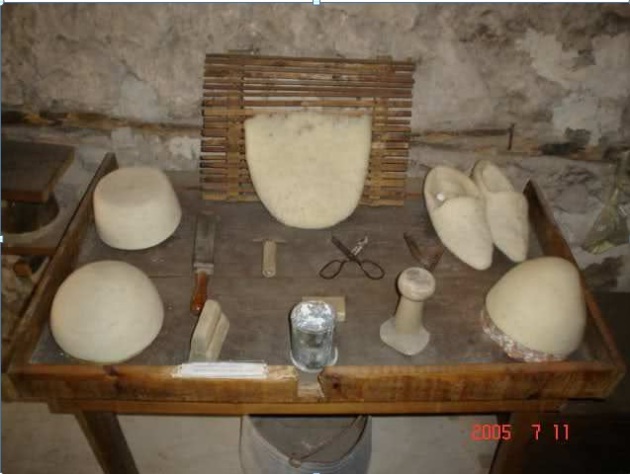
What a qeleshe is?
A qeleshe is a traditional skull cap, which is worn by Albanian men, usually from northern highlands of Albania or Kosovo and particularly in the Arberesh villages in Italy. The cap is made from one single piece of woolen felt, usually white, that is molded to the shape of the head. The name qeleshe comes from the Albanian word for wool which is lesh. It has a conical shape that resembles an egg shell cut in half. Sometimes this is worn along with a bandana tied around the head.

Ulisse or Odysseus

Albanian independence


Etruscan corsa di bighe,tomba di Colle Casuccini
The truth is that only the last part of the the word “qeleshe” means wool= lesh. The prefix ‘qe’ (Restrictive clause or defining) is a noun forming element which together with ‘lesh’ literatelly means:‘ that is made using/from wool’. In a short form the word might be pronounced q’leshe In other albanian dialects the word can be pronounced çeleshe. Therefore we don’t find any fondamental difference just a moving within the same consonant group k>c>ç>q .
The clause ‘q’ is usually followed by a verb. For ex. q’bëj, q’ec, q’shkoj etc. The vowel ‘ë’ is dropped following the phonetic rules of albanian language but the correct form would be qe bej(that I do), qe eci(that I walk), etc.
| English (90 entries) | Shqip (90 hyrje.) |
| which | që |
Do we find qeleshe somewhere else used by other nationalities beside the Albanians? In some Ancient Greek pictures/statues is very visible the presence of qeleshe covering the heads of some ancient “Greek” heroes and Gods?

The “”Greek”” Achileus and Patrocles.

The “”Greek”” Odysseus.

Hephaestus

Ptolemy

The scullcap of wool of the common man in Ancient Greece.
We do know the name of the hat on the head of Patrocles and Oddisseus in:
ALBANIAN-plis
LATIN-pileus
ANCIENT “”GREEK””-pilidion

Let say for now we dont know if these words are related to each-other(every one notices the ethymological similarity)
So let’s take a look at something we already know.
The verb ‘know’ in Attic dialect is οἶδα. But also is another synonim in ancient greek (γι) –γνοέω=know.
γνώσκω (gnôskô)– know
English———Ancient Greek——Albanian
(to) know——–(γι) γνος——— (e, te) njoh
| know (p.t., p.p. knew, known) | njoh (kr. thj., pj. njoha, njohur |

The Albanian word e njoh is pronounced:
| e ɲo |
It’s obvious that the root of this word in all three following languages, English, Albanian, and Ancient Greek is the [{kno~ /gno]. In Albanian the cluster *gn is equal to ‘nj’ for example:
bagna——————-banja
lazagna—————-lazanja
Spagna—————–Spanja etc.
The cluster gn pronounced as ɲ is typical in Ancient Greek and Latin/Neolatin languages,
and is the same used to write the Albanian njoh =know in 1635:

We have in Ancient Greek, another word which is exactly the opposite meaning (antonym) of ‘know’– ἀγνοέω-not perceive, be ignorant, be unaware of.

This word, like easily noticed is formed from ἀ (a privative prefix)+gno+eo(know, first person):
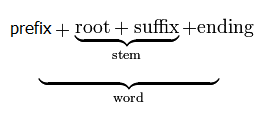

The verb ‘know’ in Ancient Greek is one of the noun portions in the word foreigner(stranger)= Ξεῖνo [ξένο(ksenos)].
Let’s now see the definition for the foreigner(stranger).
A stranger is a not known person or a phenomenon, which we do not know .
The word ksenophobia= kseno(stranger)+ phobia(fear)=fear from people you don’t know, is the best example to describe this.
From the image above is understandable that the initial ἀ performs the same function like the ξ(Ξξ like X in “Matrix). ξ is not a simple grapheme and although not a digraph has been used to represent a complex sound κ+σ, or γ+σ, or χ+σ, serving as a prefix which changes to a negative the meaning of the following verb, thus from know to don’t know.
The consonant ξ is considered a double consonant formed from the smoth κ and the spirant σ (ς).
Therefore the word ξένο is pronounced kseno.
kseno= ks(a negative double consonant)+ e(conjucture article)+ no(the primitive root for ‘know’)
MEANING
kseno=stranger~ a person (I/we/you) do not know.
In Albanian
do not know=që se njoh.
The short form in albanian is
do not know= q’se njoh~ q’s’njoh
Now let replace ‘njoh’ with the primitive root no=know. The result would be
do not know= q’seno.
We explained some paragraphs above that the evolution of the smoth consonant k in albanian is like this
k(voiceless velar plosive)>*c>ç>q (Voiceless palatal plosive). {for ex. ancient greek ὦ κύον =k^eon=qën(alb)}

So the final result after a series of etymological transformations would be
ξένο(Ancient Greek)= do not know(eng)=k’seno(alb)~qe se njoh
A thorough etymological investigation of one word alone, although asking a lot of work and attention, clearly showed that Ancient Greek language is ‘genetically’ strongly connected to Albanian.
Posted by ZEUS10 on 11.March.2008
 Dielli2
I nderuar autor doja te dija nese jeni te interesuar per nje shkembim linkesh me virtualbania.com nese po me dergoni nje email.Faleminderit dhe pergezime per blogun tuaj.
Me gjithe kenaqesine. Te me falesh per vonesen.
Zeus10